Pathways of Self-Concept and Code-Switching
Developed in 2022 by George B. Paasewe, Pathways of Self-Concept and Code-Switching explores the relationship between how individuals understand themselves and how they navigate the expectations of the environments around them.
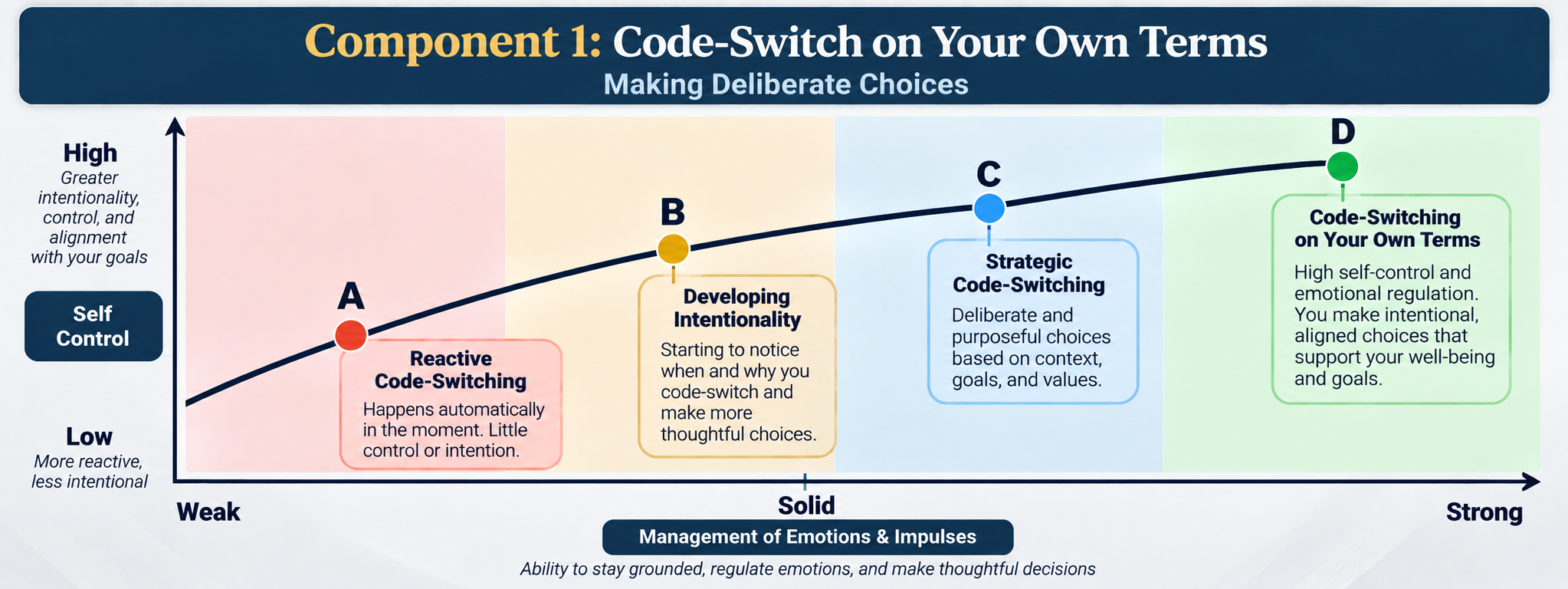
The framework offers a perspective on the intersection of identity, self-concept, and code-switching, encouraging a deeper examination of how individuals adapt, express themselves, and negotiate their sense of self across different settings.
Why This Theory Matters
Code-switching is a familiar part of human interaction. Across classrooms, workplaces, communities, and social environments, individuals regularly adjust how they communicate, behave, and express themselves. While these adjustments may appear ordinary, the expectations influencing them are not always visible or equally experienced.
Understanding this distinction matters because observable behavior tells only part of the story. Two individuals may make similar adjustments for entirely different reasons. One may experience adaptation as a natural expression of flexibility, while another may feel pressure to minimize aspects of their identity to gain acceptance, credibility, or a sense of belonging.
Pathways of Self-Concept and Code-Switching offers a lens for considering these differences and asking deeper questions about the relationship between identity and the environments people navigate. It encourages educators, organizational leaders, researchers, and individuals to look beyond behavior alone and consider the expectations, perceptions, and experiences that may shape it.
Ultimately, the significance of this theoretical perspective lies in its invitation to examine not simply how people adjust to their environments, but what those adjustments may mean for their understanding of themselves.